
Thermal Efficiency Efforts
Energy affordability remains a growing concern for households across the United States. Like the rest of the nation, Vermont is facing unprecedented increases in prices—with fuel oil prices more than doubling in the last decade. Consumers have experienced fluctuating heating fuel and electricity costs driven by a combination of global market conditions, supply chain challenges, extreme weather events, and evolving energy infrastructure needs. As energy expenses continue to place pressure on household budgets, many families are seeking practical ways to manage costs and improve long-term energy resilience.
For households that rely on fuel oil, propane, or natural gas, reducing energy waste remains one of the most effective ways to lower energy bills and improve comfort. Tightening up homes by stopping air leakage and improving insulation is often the fastest and most affordable way to save energy. No-cost and low-cost weatherization measures—such as air sealing, caulking, weather-stripping, and behavioral changes—can significantly reduce energy use while improving comfort year-round. And more comprehensive efficiency upgrades can provide even greater savings and prepare homes for future clean energy technologies.
In the early 1980s, Vermont launched the statewide "Button Up Vermont" campaign, organizing weatherization activities in communities across the state. Today, that tradition continues through community-led Button Up events, workshops, and educational programs that help Vermonters understand how their homes use and lose energy and identify opportunities to improve efficiency.
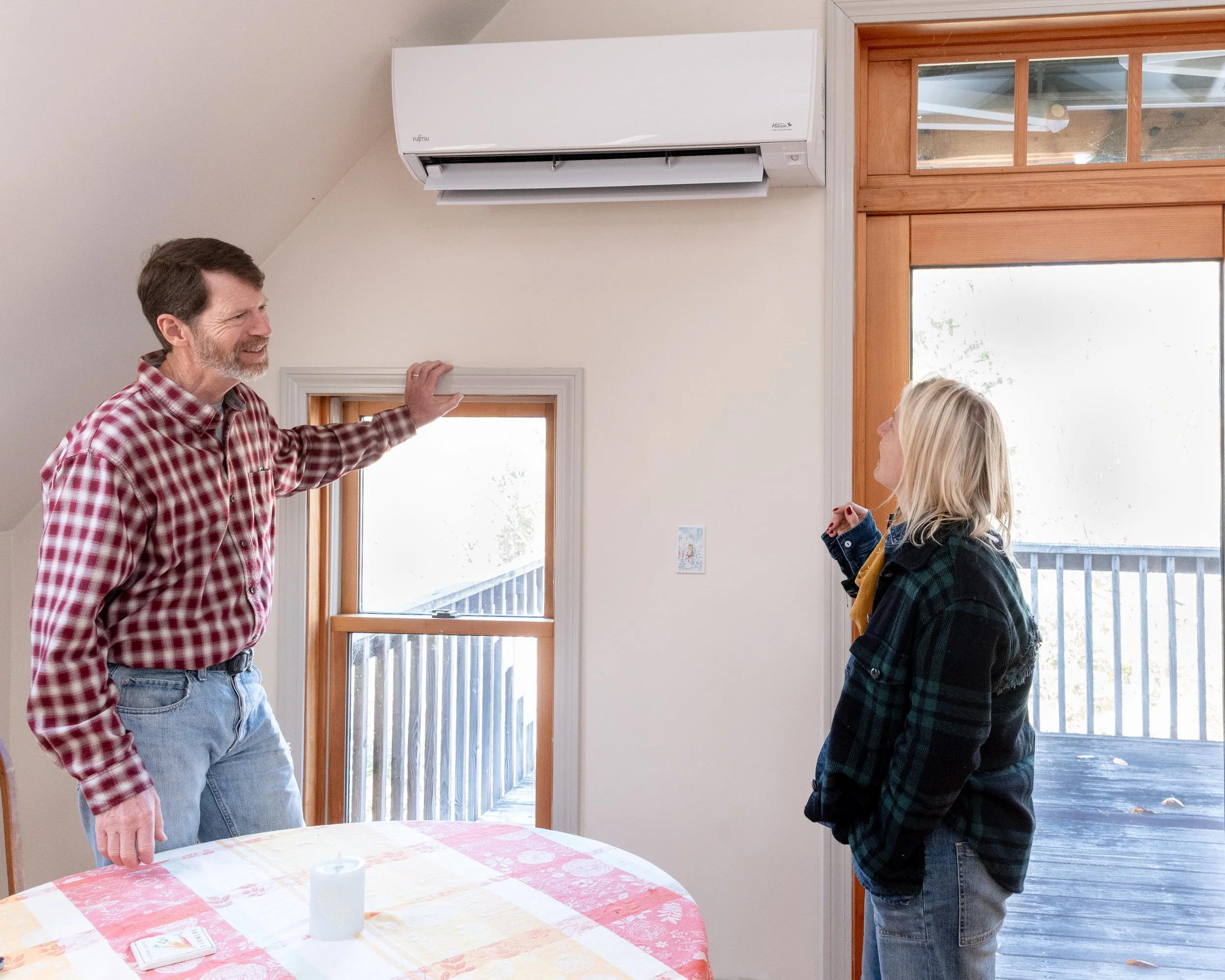
While weatherization remains the foundation of home energy savings, the range of available solutions has expanded significantly over the past several decades. Vermonters now have access to a growing array of clean energy technologies that were not widely available when the original Button Up campaign began. High-efficiency cold-climate heat pumps, advanced heat pump water heaters, rooftop and plug-in solar systems, battery storage, electric vehicles, and emerging thermal energy networks are creating new opportunities to reduce energy costs, improve resilience, and lower greenhouse gas emissions.
Together, these technologies provide households with more options than ever to improve comfort, reduce energy consumption, and take greater control of their energy future.
-
A Community Weatherization Project (CWP) is a locally designed and administered energy education and conservation program. The scope of the project may vary within each community depending on local resources, leadership, partnerships, and community priorities. The primary goal of a CWP is to educate and engage residents in taking practical steps to reduce energy use, lower energy costs, improve comfort, and increase resilience.
Successful community energy campaigns continue to demonstrate the value of local leadership and neighbor-to-neighbor engagement.
A good example of a successful CWP is the work of Bob Walker of the Sustainable Energy Resource Group, and the Thetford Energy Committee. They teamed together to utilize a door-to-door model that has proven to be very promising.
Most CWPs are organized as concentrated community campaigns over a two- to three-month period, often during the fall as households prepare for the coming winter. Keeping the program simple, practical, and action-oriented remains key to success. A well-designed CWP can help residents understand their energy use while building long-term community capacity to address broader energy, affordability, and climate goals.
Today, Community Weatherization Projects often serve as an entry point to a wider range of energy-saving opportunities. While weatherization remains the foundation, many communities also provide information about energy audits, incentives, cold-climate heat pumps, heat pump water heaters, solar energy, battery storage, electric vehicles, and emerging community-scale solutions such as aforementioned thermal energy networks.
A low-cost or no-cost Community Weatherization Project may include workshops, home visits, demonstrations, or educational materials covering topics such as:
• Conservation measures that require little or no financial investment;
• Understanding how homes lose energy through air leakage and inadequate insulation;
• Installing weatherization materials such as caulking and weather-stripping;
• Home energy audits and available incentive programs;
• Heating and cooling options that can reduce energy costs and emissions;
• Opportunities to improve household resilience and energy independence.By helping residents take immediate action while learning about longer-term energy improvements, Community Weatherization Projects continue to play an important role in Vermont's efforts to reduce energy costs, strengthen communities, and meet climate goals.
-
Heating buildings and water remains one of Vermont’s largest sources of greenhouse gas emissions and a major driver of energy costs.Concurrently, we continue to spend billions of dollars each year on imported fossil fuels, much of which leaves the local economy. As communities look for ways to reduce emissions, lower energy costs, and improve energy resilience, Thermal Energy Networks are emerging as a promising solution.
Thermal Energy Networks use underground piping and highly efficient heat pump technology to move and share thermal energy between buildings. By drawing on the stable temperatures below the earth’s surface and capturing heat that would otherwise be wasted, these systems can provide heating, cooling, and hot water while significantly reducing energy use and greenhouse gas emissions.
And it’s easier than ever to explore if a Thermal Energy Network is right for your community. Recent changes in Vermont law have made it easier for municipalities to explore and develop Thermal Energy Networks, creating new opportunities for towns, campuses, and business districts to invest in local, reliable, and affordable energy infrastructure. Read more.
-
Vermont Community Thermal Networks
Vermonters need reliable, affordable, clean heating and cooling. We help communities explore how a Thermal Energy Network can serve those energy needs and support other local priorities. Read more.
Efficiency Vermont
For a list of energy auditors, energy efficiency tips, and other efficiency resources. Read more.
Addison County Energy Navigators
A local program providing free one-on-one home energy consulting services for residents of Addison County. Read more.